
Forex month-end flows explained
Read Time: 5-6 minutes
As traders we usually focus on the big obvious market movers. Things like central bank decisions, key economic data, technical levels and risk sentiment.
All those things matter, but there is another driver that can move Forex markets near the end of the month.
That driver is called month-end flows.
These month-end flows are driven by large institutional transactions that happen because big corporates, asset managers, pension funds, banks and index-linked investors need to rebalance portfolios, adjust currency hedges, value assets or settle currency exposures.
It’s important to keep in mind that these flows are usually mechanical and not driven by any particular macro bias.
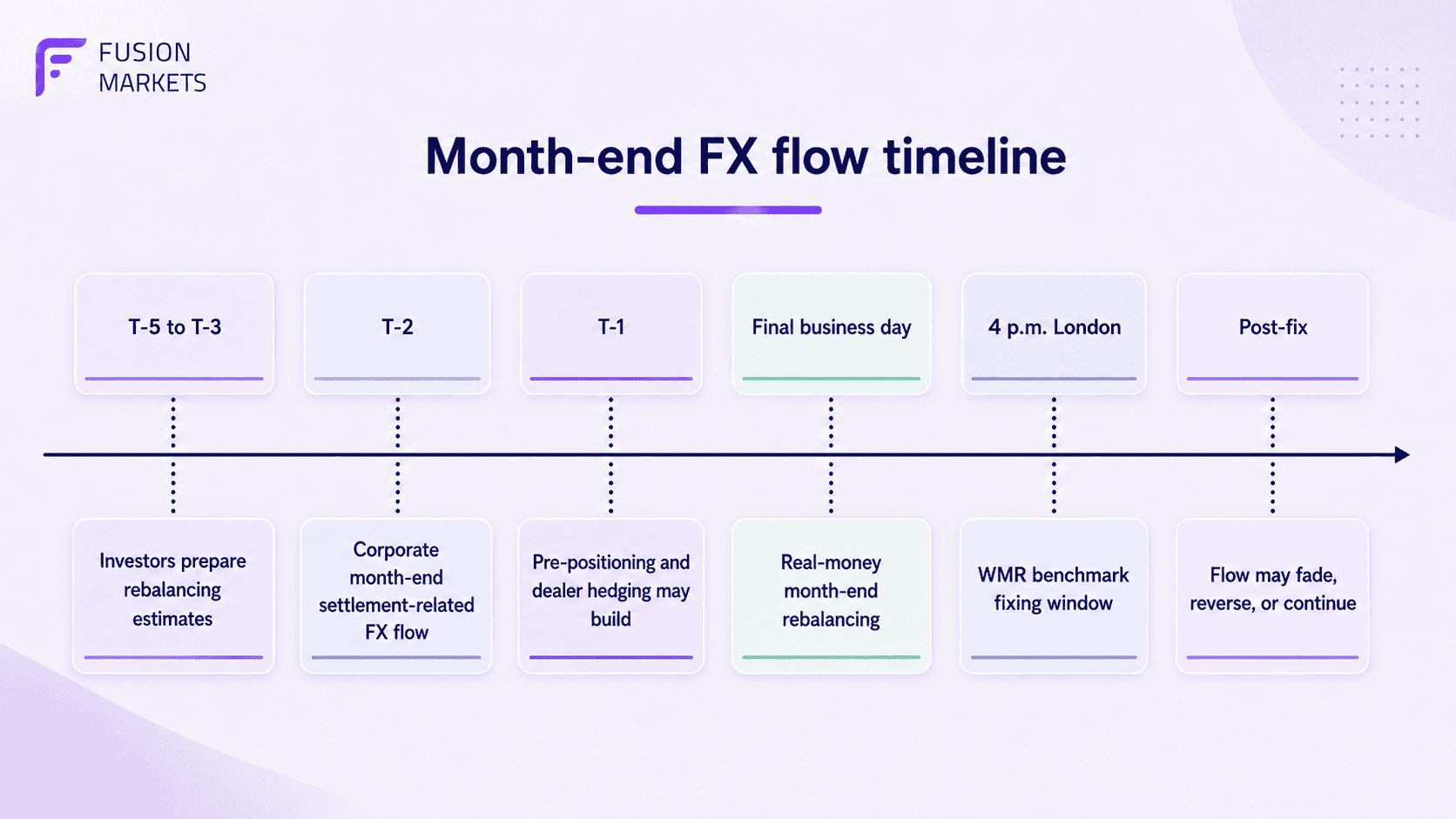
Here is a quick helpful illustration to show the two types of month-end flows.
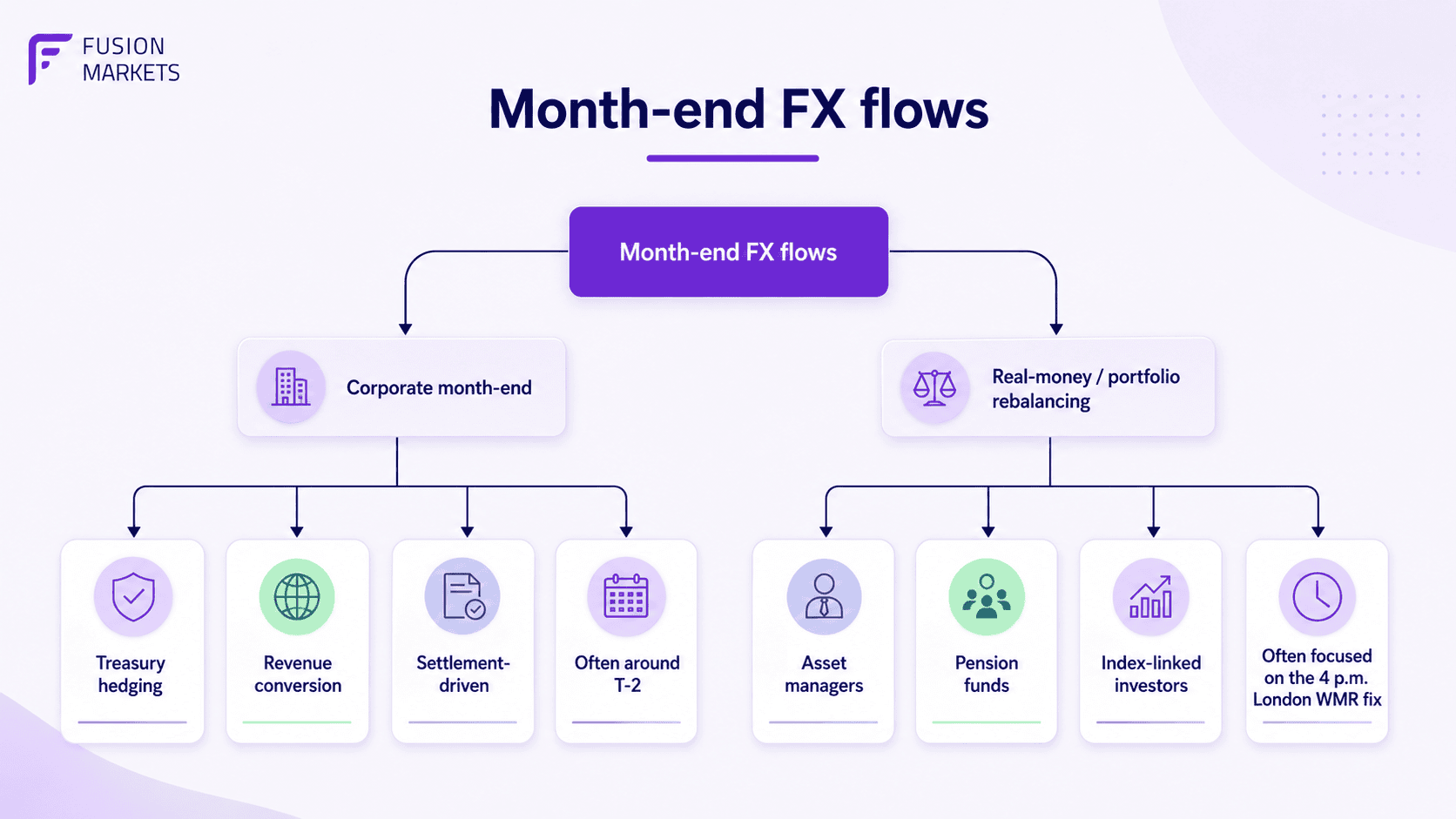
The first one is called corporate or treasury month-end flow.
This usually comes from companies managing foreign revenues, costs and hedges.
For example, a US company earning money overseas may need to convert foreign currency back into dollars.
Sometimes they might simply want to hedge those currency exposures for accounting and treasury purposes.
These flows can create USD buying near the end of the month.
However, the timing is important here because spot forex transactions usually take two business days to settle.
So, if a company wants a currency transaction to settle on the final business day of the month, the last day for them to complete the transaction would be two business days before the last business day of the month-end.
That is why corporate month-end flows show up before the actual final day of the month.
The second category of month-end flows is rebalancing.
This comes from large investors who own international assets and hedge their currency exposure.
You see, if a fund manager outside the US has a big allocation in US equities, and then US equities rally very hard during the month, those foreign investors’ Dollar exposure gets bigger.
So, to keep the same hedge ratio, they may need to sell dollars.
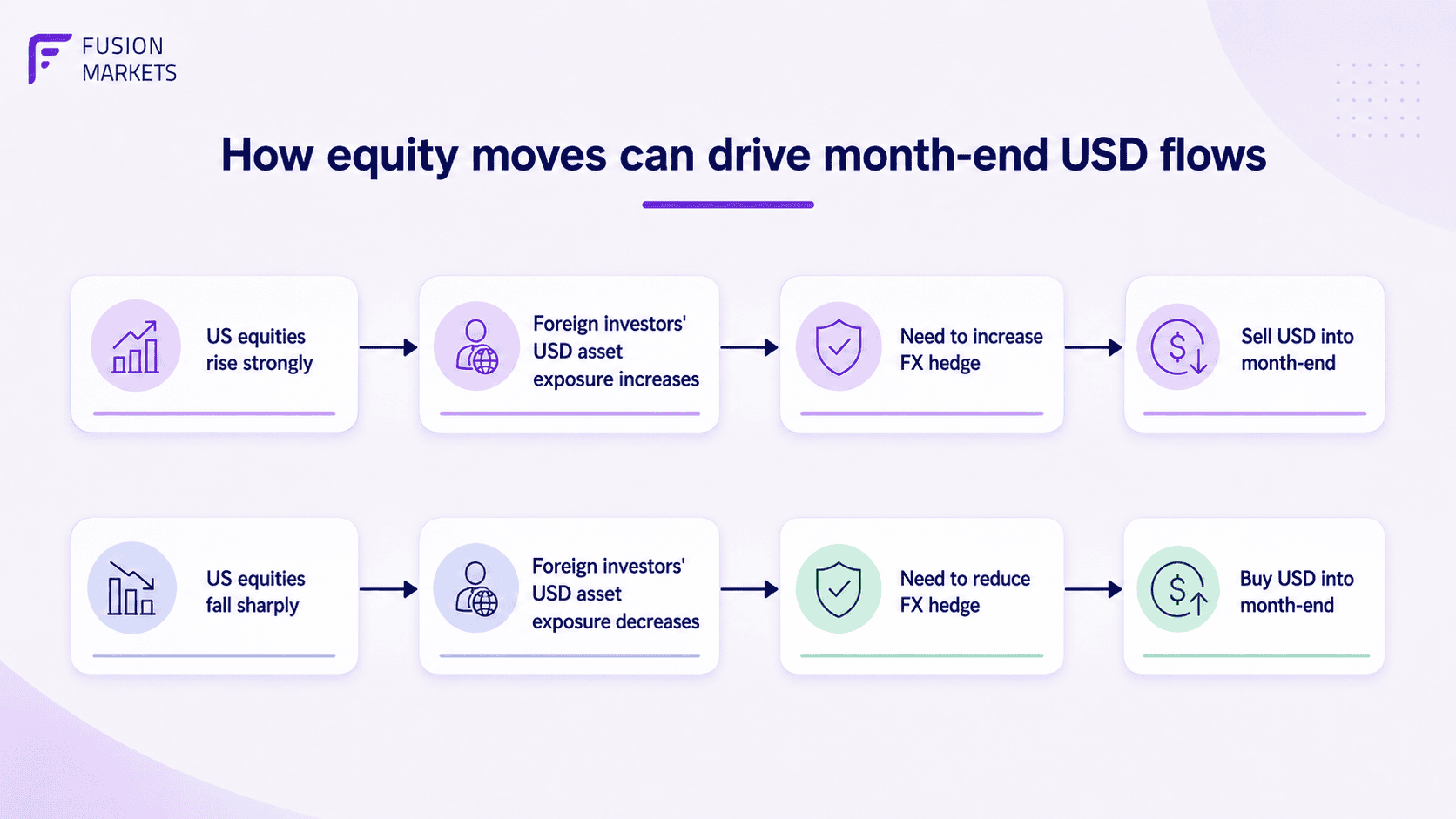
And if US equities fall sharply, the foreign investors’ dollar exposure falls, which means they may have to buy dollars to maintain their hedge ratio.
So, very strong US equity performance during the month can create dollar selling pressure. While very weak US equity performance can create dollar buying pressure into month-end.
There is also bond flows to consider as well. Bond flows, global equity performance, and existing positioning can all complicate the signal.
Thus, it’s not a perfect science but this is a good starting point to think about it.
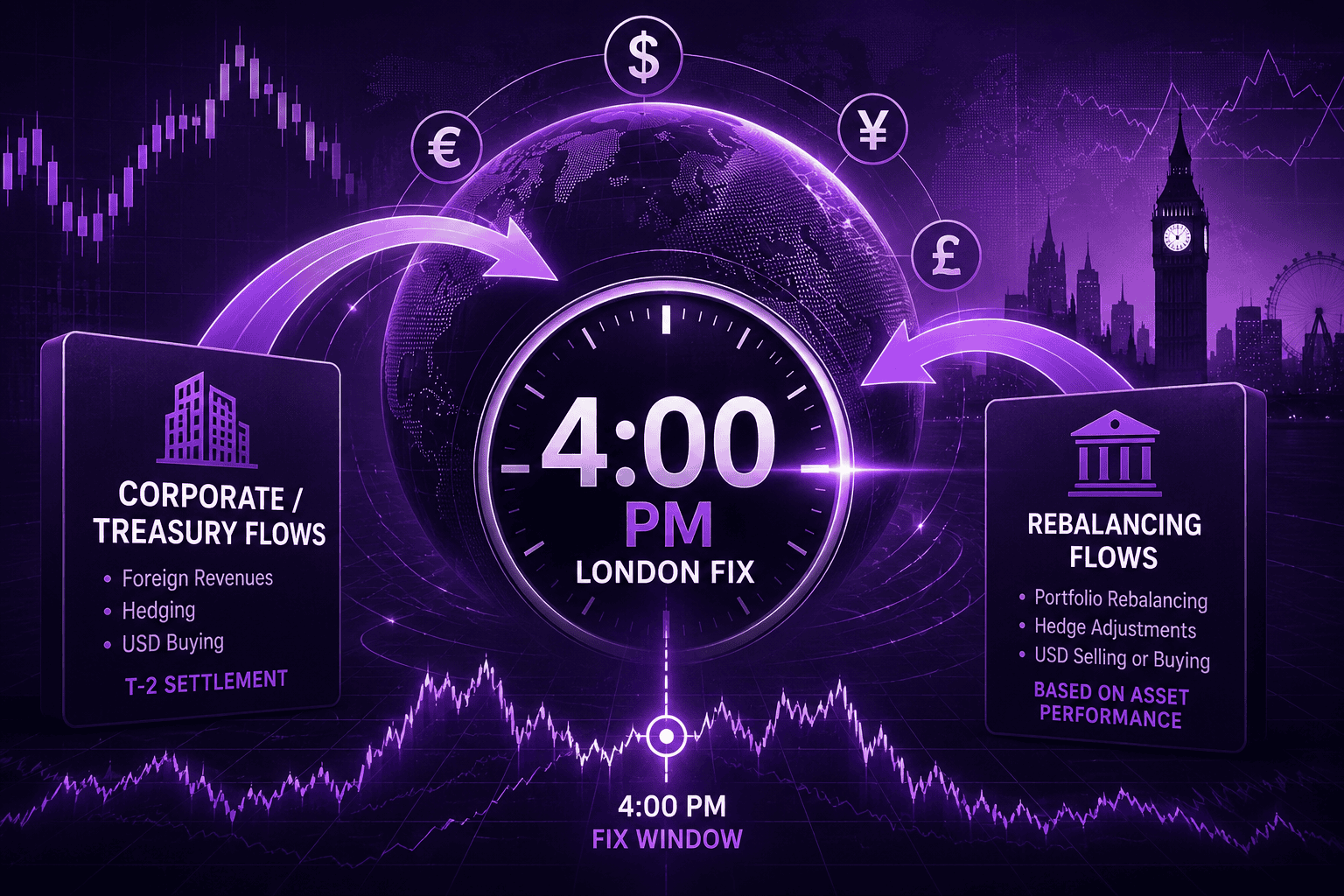
There is a very important flow window called the 4PM London fix.
In FX, the term ‘fix’ simply means a benchmark exchange rate that is calculated at a specific time of day.
So, instead of banks, funds, companies and index providers all using different exchange rates, they can all refer to a standard benchmark rate.
The most important one for global FX markets is the 4PM London fix.
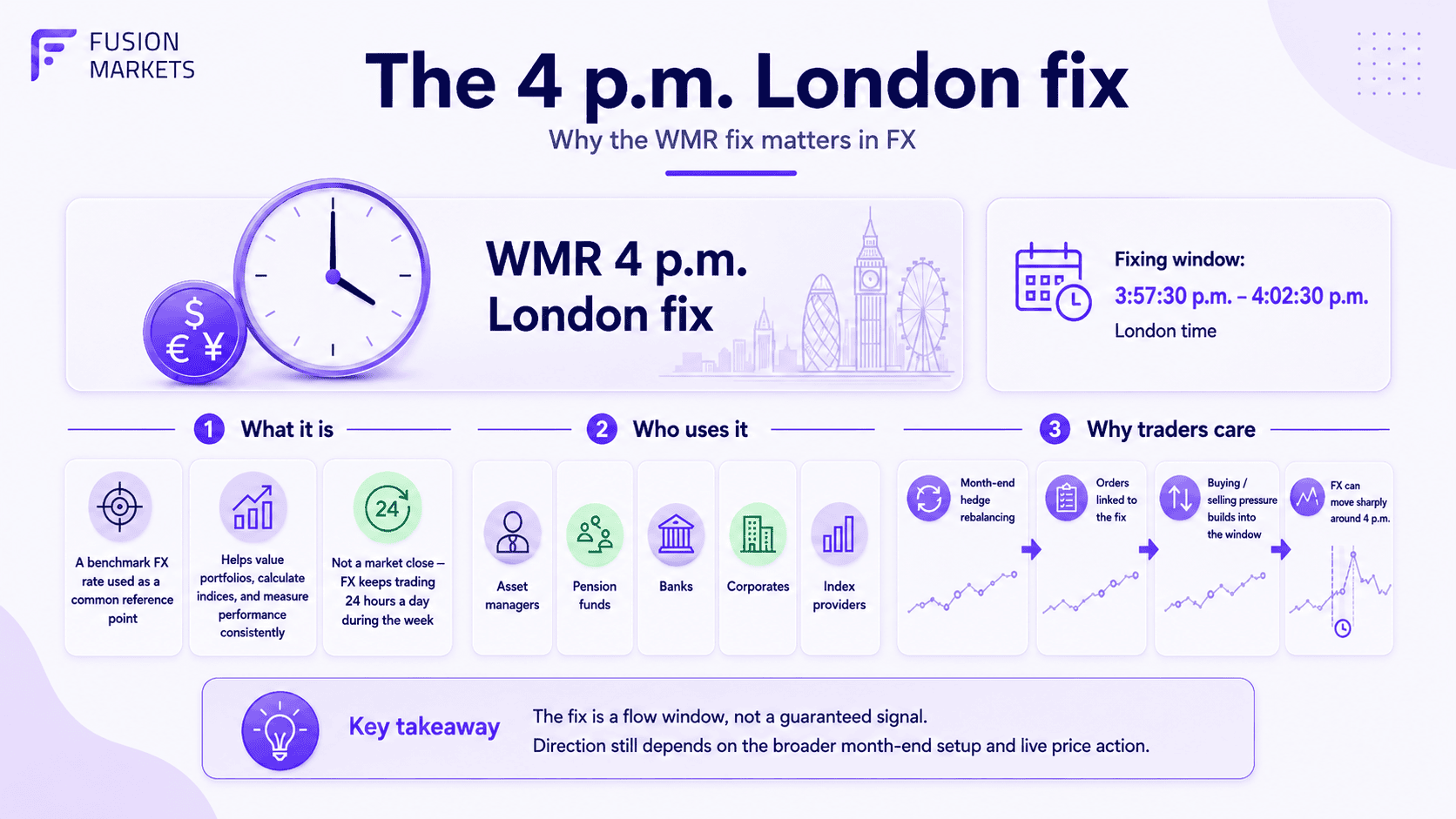
It is commonly treated as the main global FX benchmark, and used for portfolio valuation, index calculations and performance measurements.
The rate is not based on one random tick at exactly 4:00 p.m. For spot FX, the benchmark is calculated using market data from a short window around the fix.
Roughly from 2 minutes 30 seconds before to 2 minutes 30 seconds after 4PM UK time.
This is where things become important for traders.
Because so many large institutions care about that benchmark, a lot of FX orders can be linked to it.
An asset manager may ask a bank to buy or sell a currency at the fix.
A fund rebalancing its hedge may want its execution to match the benchmark used to value its portfolio.
That can concentrate buying or selling pressure into a very short period of time around the fix window.
The key point is that the fix can help explain why FX sometimes moves aggressively at a very specific time of day, even when there is no obvious news headline.
For example, if EURUSD grinds higher into the 4PM fix and then fades afterward, that may suggest benchmark-related flow was part of the move.
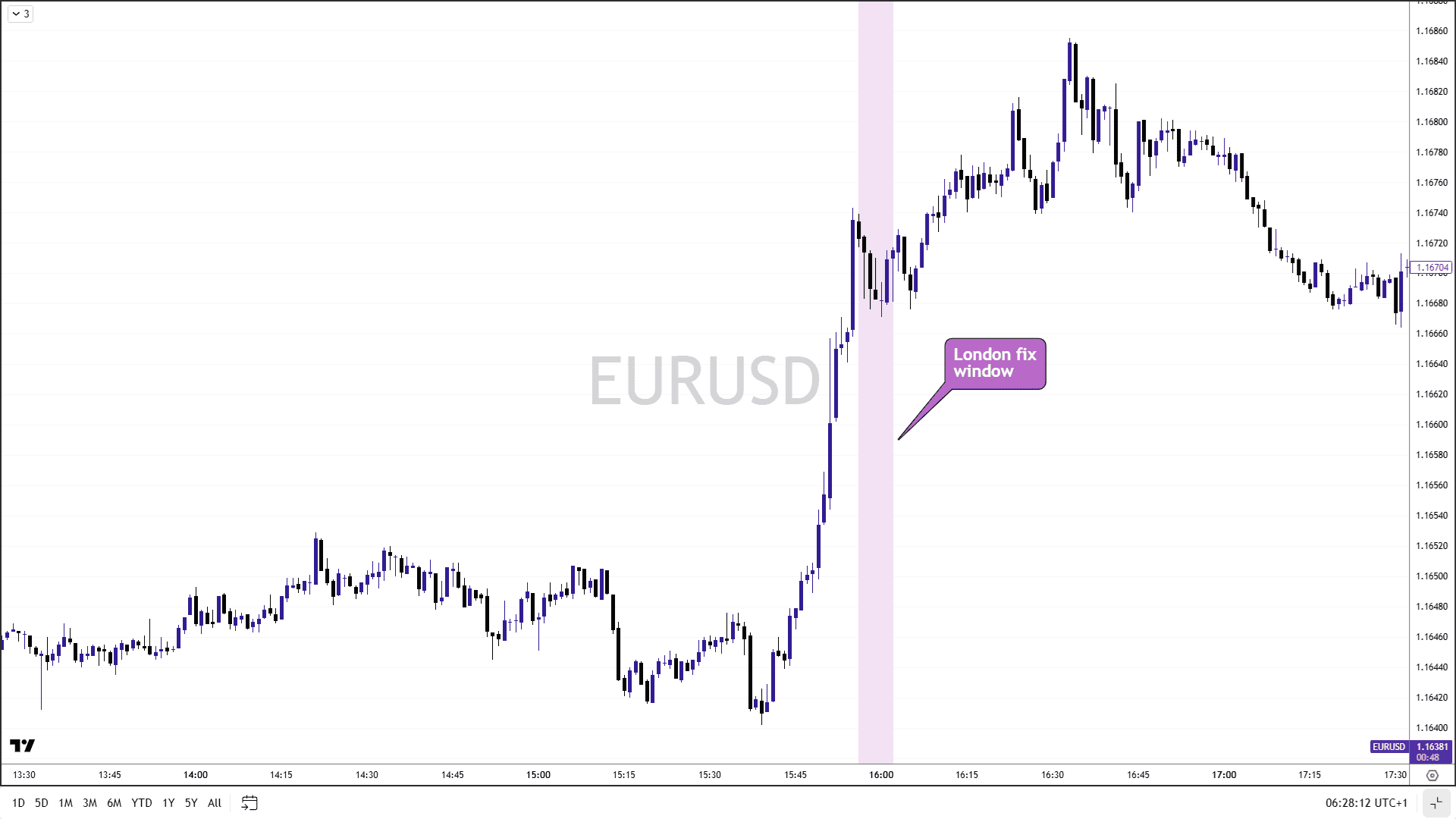
In the above chart we can see EURUSD starting to run higher about 15 minutes before the fix, and later the move started to reverse the initial fix-related push higher.
Traders also use the fix close levels as possible pivot points where price might react to and react from later.
Below is a quick example of a month-end fix level on the EURUSD chart. Notice how price used the zone around the prior fix as an area of support on multiple occasions.
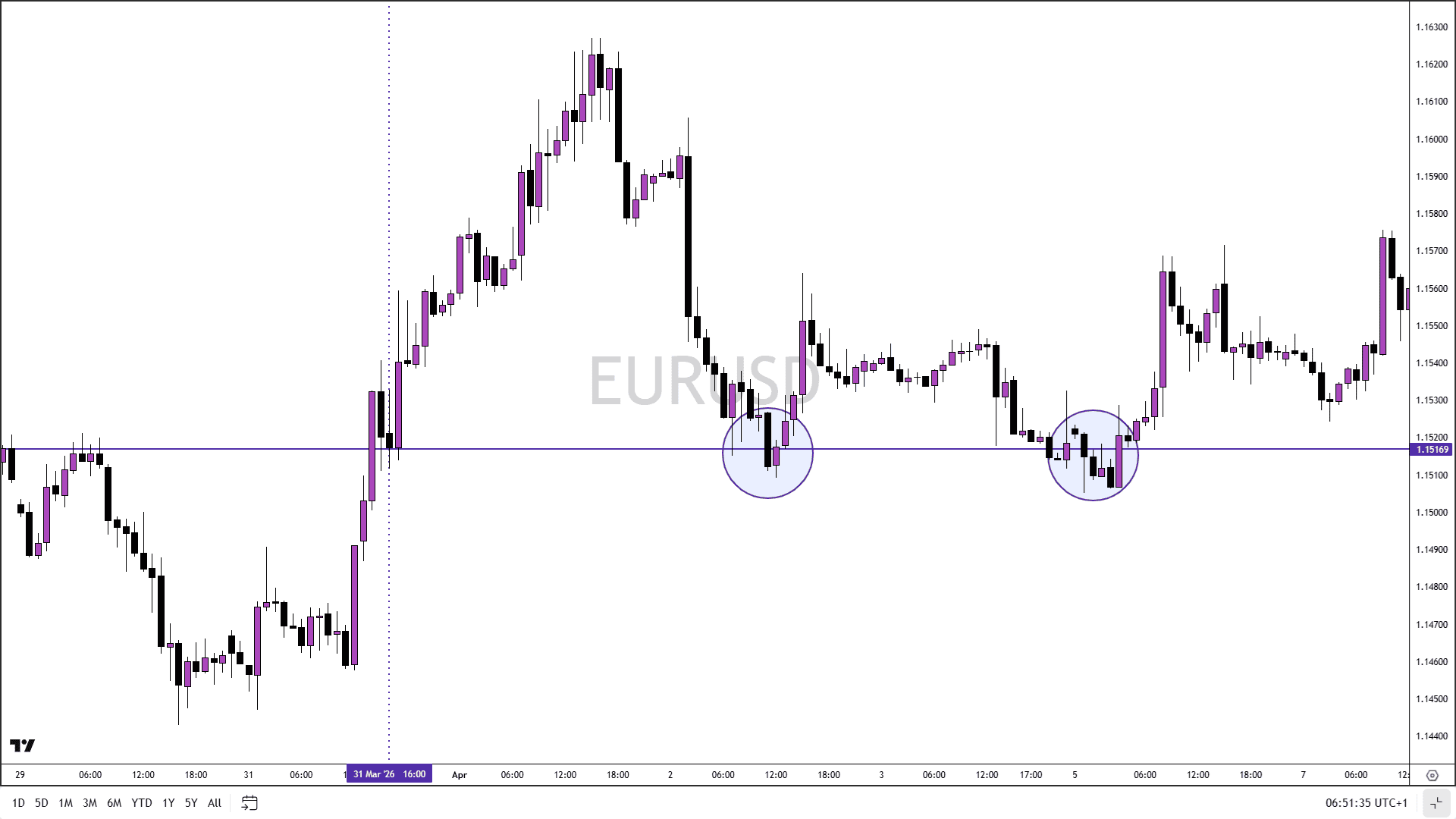
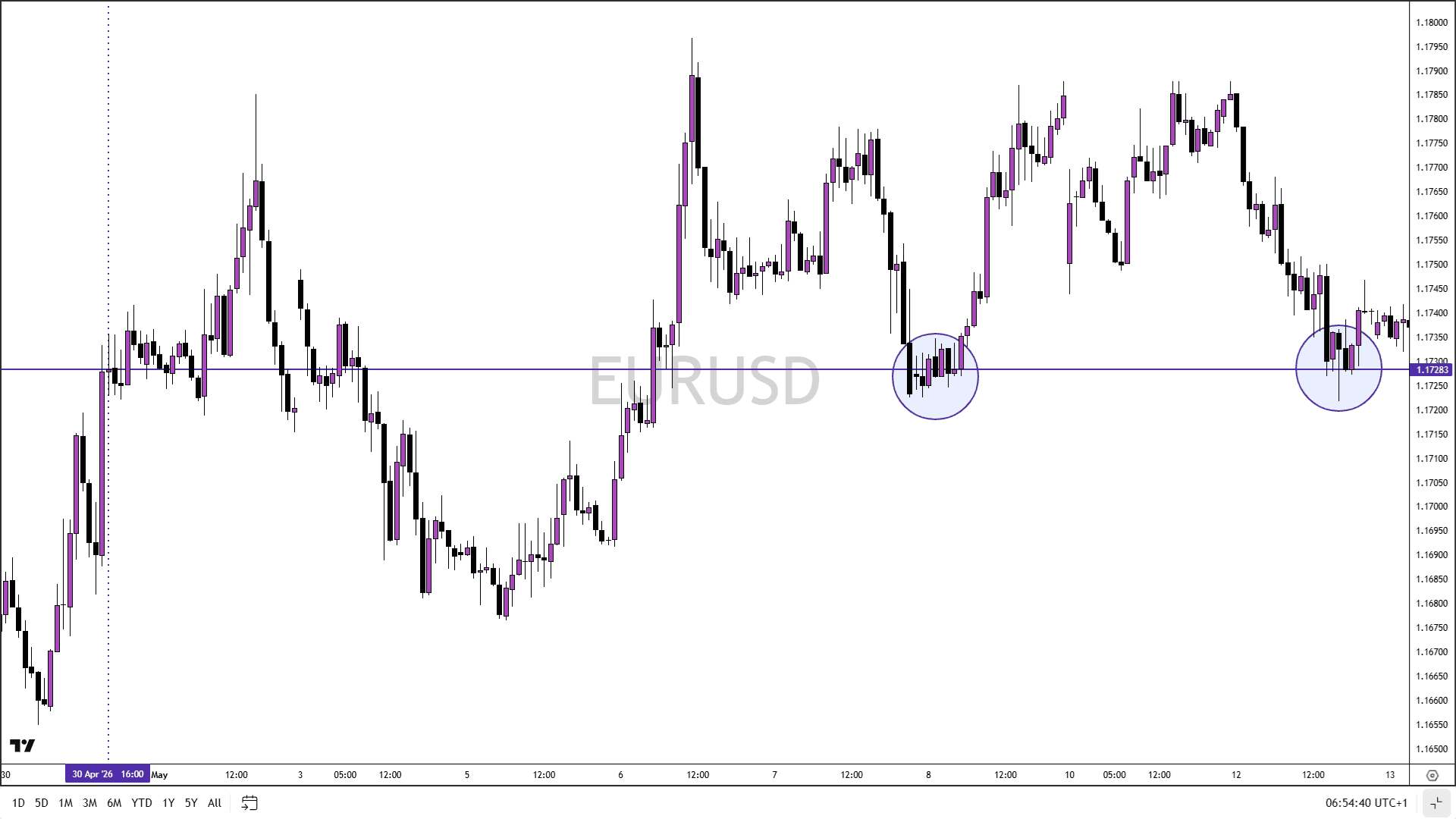
This isn’t an isolated occurrence either. Below is another example of the same dynamic on the EURUSD pair.
A practical month-end checklist can be very simple.
First, identify the final business day of the month and the T-2 date.
Then check whether there are holidays that may alter the dates.
Next, look at monthly asset performance. Did US equities massively outperform or underperform their peers? Did US Treasuries move sharply versus their peers?
Then ask what the flow implies for FX. Strong US equity performance can imply USD selling from hedge rebalancing.
Weak US equity performance can imply USD buying.
Corporate month-end, however, may create a separate USD-buying impulse around T-2, especially if US corporates are converting foreign revenues.
Finally, check live price action. A flow idea becomes more useful when the market starts confirming it.
If the expected USD buying window arrives and USDJPY is grinding higher without another clear reason, the flow thesis gains credibility.
Also, if Dollar pairs start falling or ripping into the fix window without any other catalyst, watch out for possible reversals.
The biggest mistake is treating month-end flow as a guaranteed strategy.
It isn’t a strategy.
Some months have weak signals while others might have conflicting performance in equities and bonds.
Another mistake is assuming month-end means the same thing for every pair.
The impact across Dollar pairs can be very different so it’s not a one-size-fits-all scenario.
Don’t think if month-end flows as a way to predict price action but rather use it as a way to avoid being surprised by mechanical flow.
Once traders understand why some of those strange moves are happening, it helps to make more sense of what’s going on and how it could impact your trading.
We’ll never share your email with third-parties. Opt-out anytime.