
How to cope with wars as an FX trader

Read Time: 3-4 minutes
Wars have a way of cutting straight through the noise in financial markets. Trends that felt stable can break in a matter of hours, correlations shift, and price action becomes far less predictable. For FX traders, geopolitical conflict isn’t just another headline – it’s one of the few catalysts that can quickly reshape the market in real-time. And it can work against you, or to your advantage.
The first thing to understand is that currencies don’t react to war in isolation. They respond to what war means for growth, inflation, capital flows and risk sentiment. That’s why the same conflict can produce very different FX reactions depending on where it occurs and how markets interpret the broader impact.
When a war or conflict breaks out, the early stage driving force is usually uncertainty. Markets don’t yet know how far things will escalate, how long disruptions will last, or what the economic fallout might look like. That uncertainty tends to trigger a classic “risk-off” response. Traders move away from growth-sensitive and higher-yielding currencies, and into those perceived as safer or more liquid.
This is where you’ll often see strength in the US dollar, Japanese yen and Swiss franc. It’s not necessarily because those economies benefit from war, but because they offer liquidity, stability, and deep capital markets. In contrast, currencies tied to global growth – like the Australian dollar or New Zealand dollar – can come under pressure as risk appetite fades. As an example, you can see the impact the 2026 conflict between the US and Iran has had on futures pricing of our local currencies;
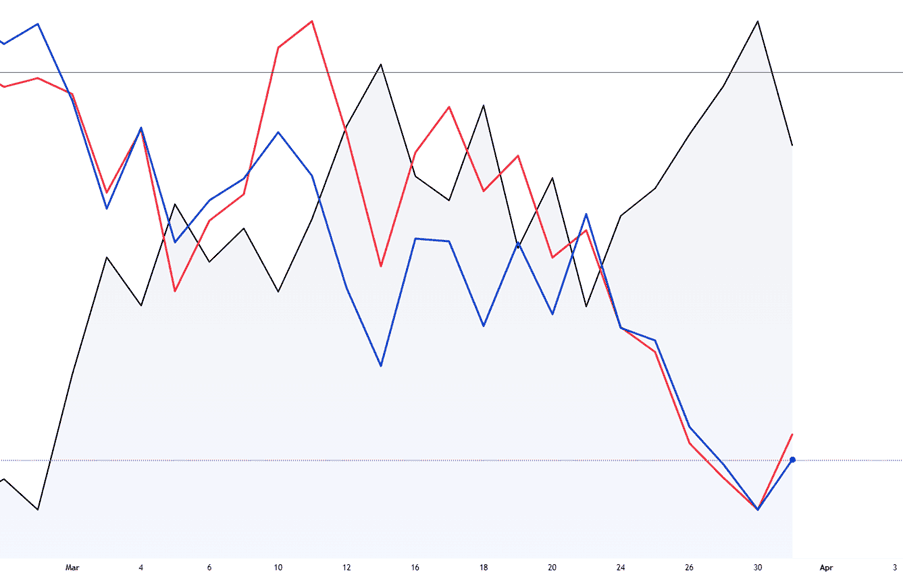
Figure 1 - USD (black), AUD (red), NZD (blue) - Futures
But what’s important is that this reaction is rarely clean or linear.
One of the defining features of trading during geopolitical conflict is sudden changes in direction. You might see a strong risk-off move one day, only for markets to reverse sharply the next. This is often driven by mainstream media headlines – ceasefire talks, escalation fears, or unexpected developments on the ground. Each new piece of information forces the market to reprice probabilities in real time.
A good way to think about it is how quickly the narrative can flip. Take the recent tension around Iran – there were moments where the market suddenly started pricing in the risk of disrupted oil supply. You’d see crude jump almost immediately (Figure 2), and that ripple effect doesn’t stay contained. Higher energy prices feed straight into inflation expectations, which then bleeds into rate pricing and, ultimately, currencies.
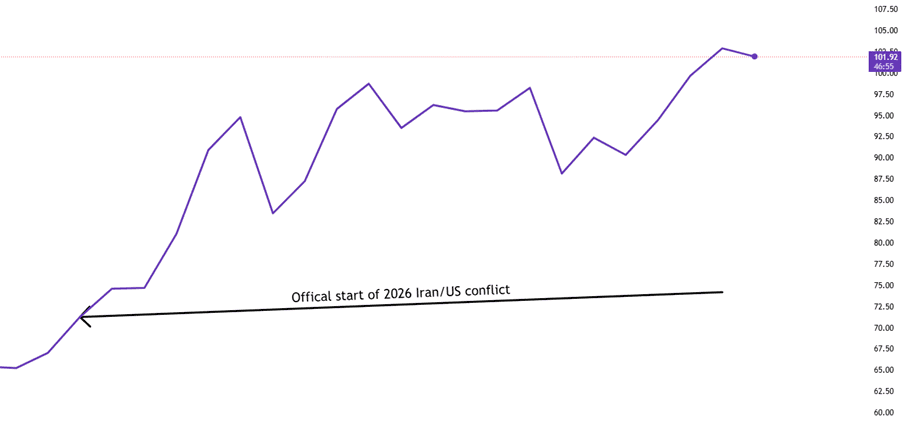
Figure 2 - Crude oil futures - Daily chart
But it’s rarely a clean, one-direction move.
You can have risk sentiment deteriorating at the same time as commodity-linked currencies find a bid. So, whilst broader markets are leaning defensive, currencies like CAD might hold up better than expected – or even rally briefly. That push and pull is what makes price action during these periods feel disjointed. Moves don’t extend the way you’d normally expect, and reversals can come out of nowhere.
Don’t forget about policy
There’s also a policy angle running in the background. If energy prices spike and remain elevated, then central banks are suddenly dealing with a different inflation profile. That can shift expectations around how long rates stay restrictive. On the flip side, if the conflict starts to weigh on global demand, the conversation can pivot towards easing. FX tends to sit right in the middle of that tug-of-war, constantly repricing what central banks might do next.
Execution-wise, conditions can change quite a bit too. Early on, liquidity isn’t always great. You’ll notice spreads creeping wider, levels getting taken out without much resistance, and price behaving in a way that doesn’t quite respect the usual structure (you can see our live and historical spreads here [https://fusionmarkets.com/Trading/Forex-cfd-spreads]) It’s one of those environments where relying purely on technicals can leave you a step behind, because the underlying driver is shifting so quickly.
As things settle, the market usually finds its footing again. Once there’s a bit more clarity around how the situation is evolving, the focus drifts back towards the measurable stuff – trade flows, supply constraints, fiscal responses, that sort of thing. That’s when you start to see more familiar macro relationships come back into play.
When a conflict inevitably settles down, it’s important to remember that the risk of further escalation doesn’t simply disappear. Geopolitical risk tends to sit right under the surface and, whilst it may go unnoticed, it doesn’t take much for it to flare up again – and that lingering uncertainty is often enough to keep volatility ticking higher than usual, even if things look relatively calm on the surface.
From a trading perspective, it’s less about trying to guess how the conflict ends as this is impossible unless you’re in the room with the politicians discussing their next move. Rather, it’s more about recognising how markets tend to behave while it’s unfolding.
Expect higher volatility, but not necessarily cleaner trends. Expect correlations to shift, sometimes in ways that don’t immediately make sense. Expect markets to overreact, then correct, often within short timeframes. And most importantly, expect the narrative to evolve quickly.
Wars don’t just move markets – they change how markets behave. If you approach them with that mindset, you’re far better positioned to navigate the noise.
We’ll never share your email with third-parties. Opt-out anytime.