
FOMC preview:
A hold with nothing attached
Read Time: 4-5 minutes
This week sees the FOMC step up to the plate for their July rate decision.
On paper, this should be a relatively boring and benign decision, as there is no updated Summary of Economic Projects (SEP), and the recent data provides the Fed cover to wait-and-see.
However, short-term interest rate markets have an interesting setup running into the meeting.
- If no one expects a hike, why is there a close to a 40% chance of a hike?
- Economic context argues for patience
- You can lead a horse to water, but you can’t make him drink
- So, you’re saying there’s a chance…
Even though the economist community largely expects the FOMC to leave rates on hold at 3.50%-3.75%, there is quite a bit of hike premium baked into short-term interest rate markets.
OIS markets currently price in 10 basis points of tightening risk, which means pricing around a 60% chance of a hold, versus 40% chance of a hike.
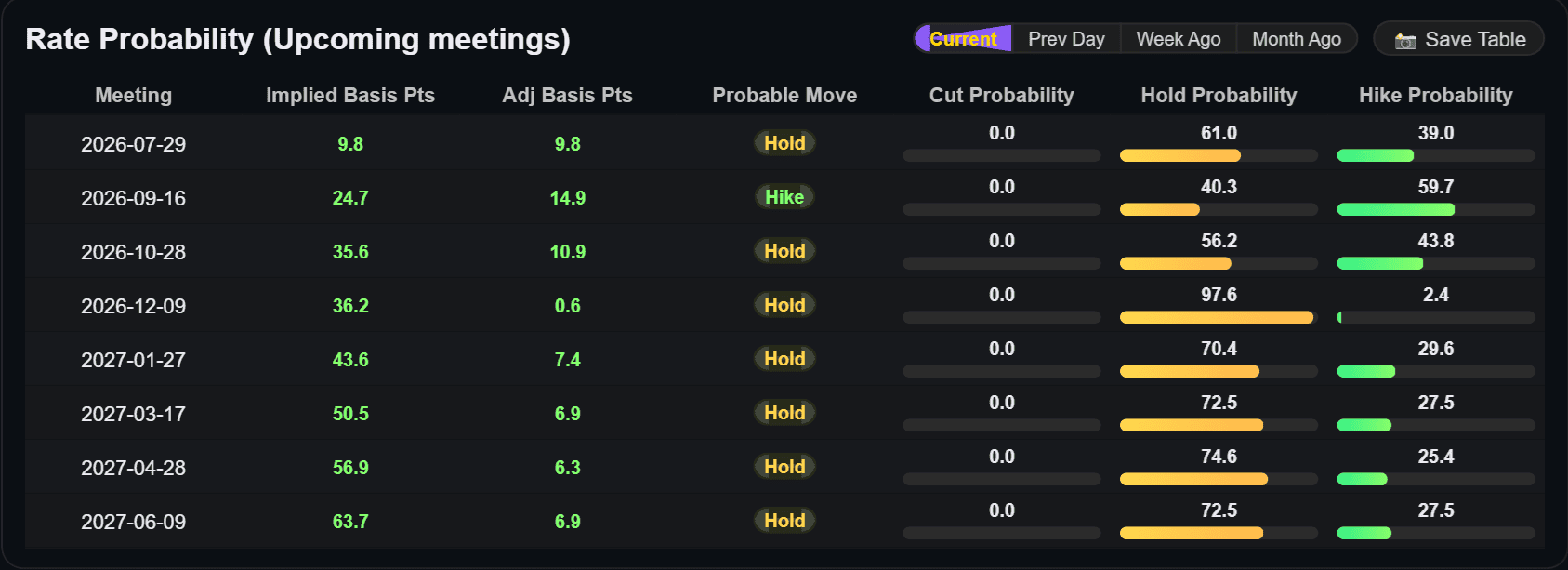
This needs to be seen in the right context though.
Very few analysts actually expect the Fed to announce a hike on Wednesday. What we are really seeing is hedging as a result of the recent pop in oil prices.
When oil rises close to 30% in less than a month, it’s tough for rates markets not to react and hedge some tightening risk.
That means that we could see a little bit of a small dovish reaction across major asset classes should the Fed hold as some of that tightening risk is priced out, but we wouldn’t expect that to be a monster move.
That also puts a lot more focus on Warsh’s press conference…
In terms of the economic context, the recent US data gives the Fed cover to wait-and-see.
June CPI printed much softer than markets expected, and payrolls also saw some softness creeping in.
But the recent escalation in geopolitics and the pop higher in oil complicates the situation as they can only act on what info they have available, and who knows where the situation will be in the next week or month or two months from now.
Several FOMC members have made it clear that one softer inflation print doesn’t take away the concern or focus to bring inflation back to target.
So, the softer data shouldn’t see any material shift in messaging or tone.
In that sense, the expectation for the meeting is framed as a hawkish hold.
What the markets really want to know is whether the recent economic data and geopolitical events increase or decrease the chances of a hike in September.
However, the new Warsh-Fed has already trimmed down their statements to very short and non-committal memos.
During the June press conference, and his testimony, Fed Chair Warsh made it very clear that the current Fed will not be spoon-feeding the market with forward guidance anymore.
With that in mind, the hope that the Chair tells markets what they want to hear about a September hike is probably wishful thinking.
The most likely outcome is a message that acknowledges the recent data but declines to sound comfortable given where oil markets are currently trading.
If we were to get lucky, what type of outcomes could potentially impact markets.
A clear nod to a September hike:
Markets already fully price a 25-basis point hike by September, so on the surface a nod of a hike should be big news. However, since there is a fair bit of uncertainty around the geopolitical situation, markets might take a September nod as enough to start pricing a second hike in December.
That should be marginally positive for the USD and negative for gold and equities.
Gold has an interesting setup in this scenario as the yellow metal has failed to sustain any attempts of a bounce in recent weeks.
Momentum, technical signals and macro drivers are flashing warning lights, so a hawkish Fed could see sellers testing recent lows around $3940.
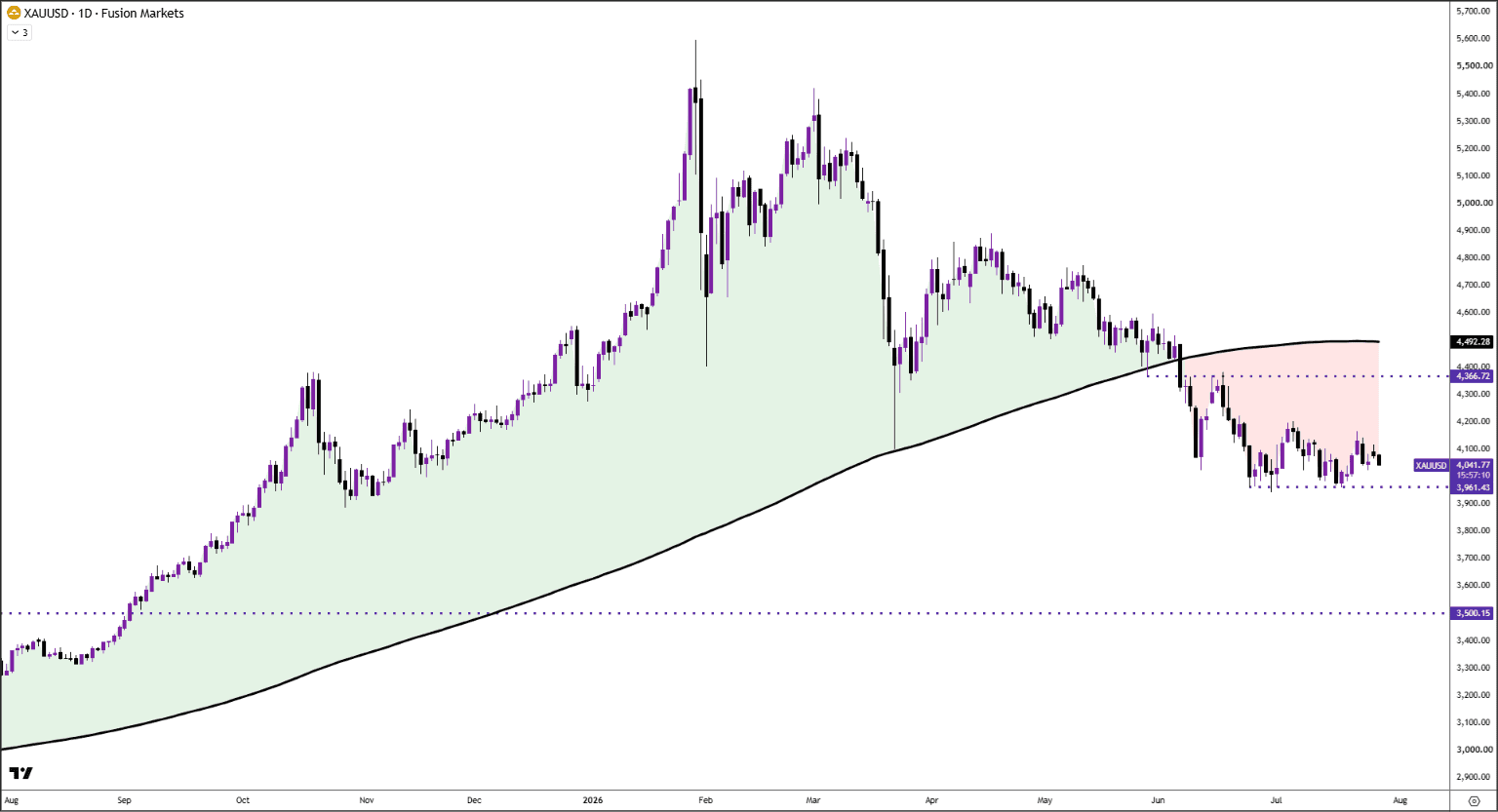
A break and close below that, puts next support around $3500 into focus.
A clear push against a September hike:
Since a hike for September is fully priced in, and since there is a bit of tightening risk already hedged into the meeting, a dovish surprise could create a bigger reaction.
Especially with the USD trading close to 12-month highs, and gold trading close to 8-month lows, and with positioning a bit crowded on the Dollar side.
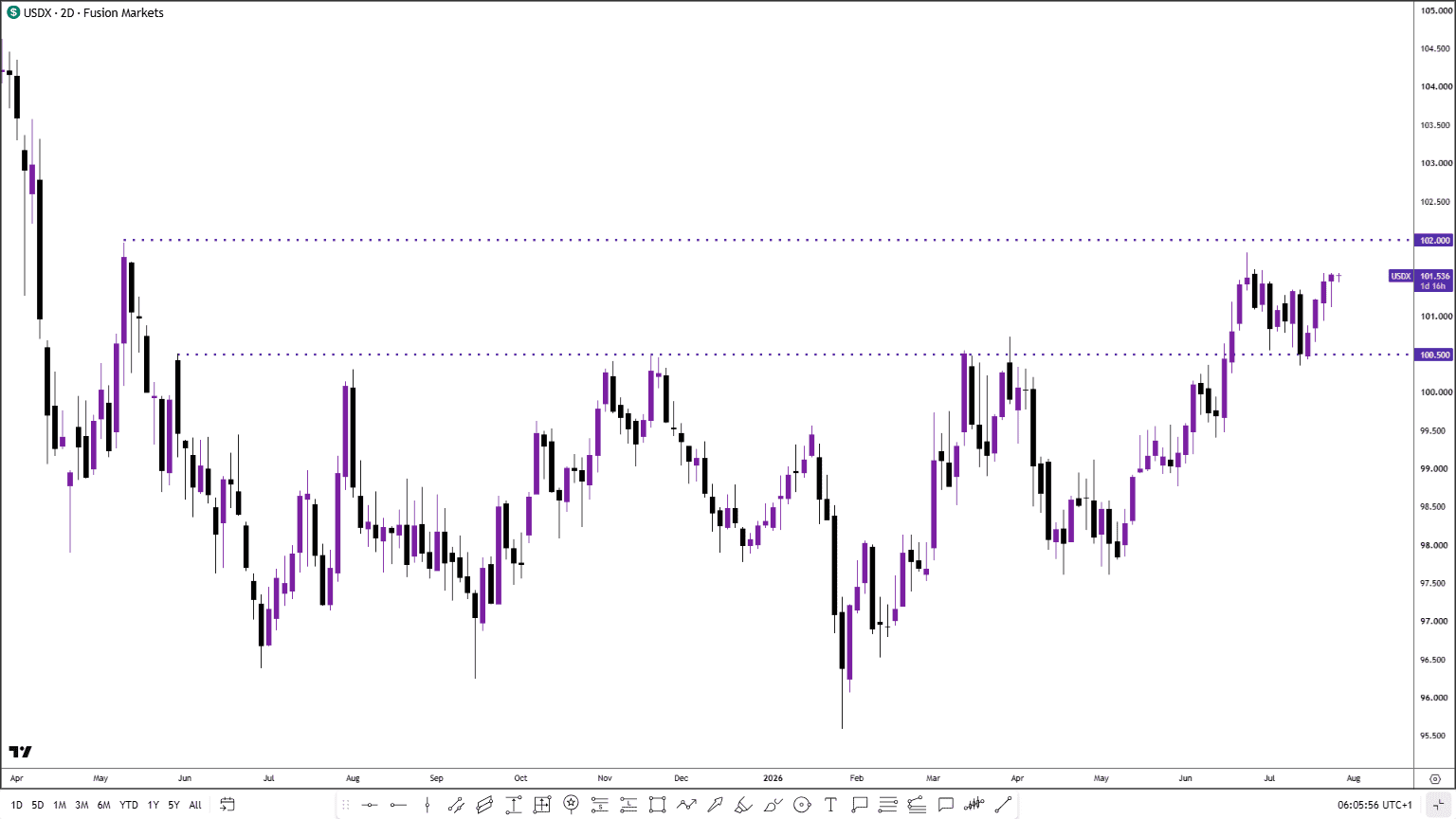
A dovish surprise would bring major support around 100.500 for the USDX into focus.
However, the other pair to watch in that scenario is the USDJPY.
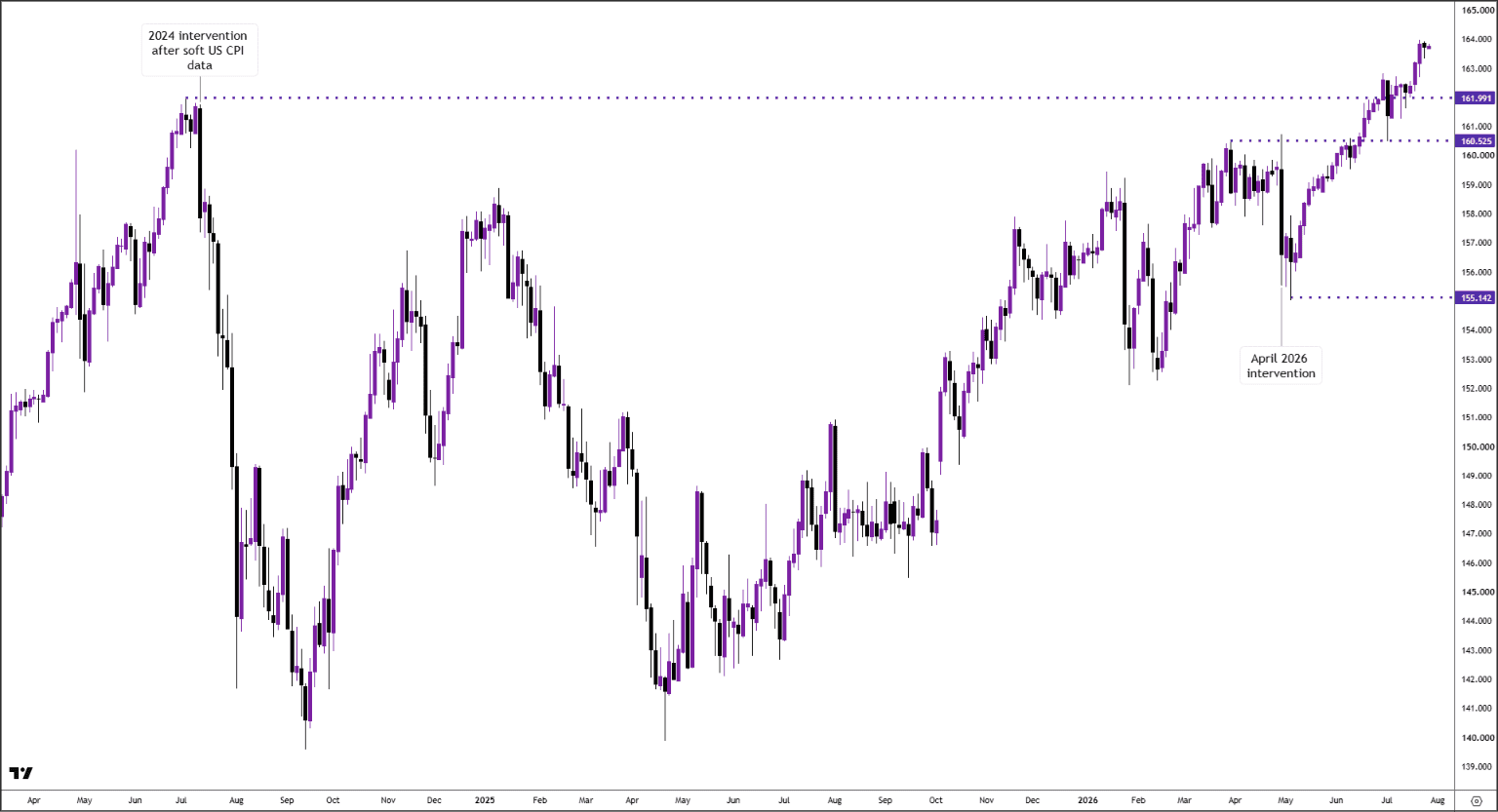
Remember that the Japanese Ministry of Finance has in previous occasions used a softer Dollar as a trigger for intervention.
So, a dovish surprise could spark some activity from them, which means USDJPY is worth keeping on the radar as well.
As always, keep your head on a swivel with these events as they can create a sizeable amount of volatility.
We’ll never share your email with third-parties. Opt-out anytime.