
What a Normal Trading Day in Gold Actually Looks Like
Read Time: 5 minutes
Gold is one of those markets that develops a personality the longer you watch it. At first glance, it can seem random – sharp spikes, sudden reversals, aggressive breakouts – but after a while you start noticing patterns in how it behaves throughout the day. Certain hours tend to be slower, others become chaotic, and there are periods where gold almost feels like a completely different market altogether.
For traders, understanding that rhythm matters. Gold doesn’t trade the same way at 10am London time as it does late in New York or during the quieter Asian session. Liquidity changes, participation changes, and the reasons driving price action can shift several times within a single trading day.
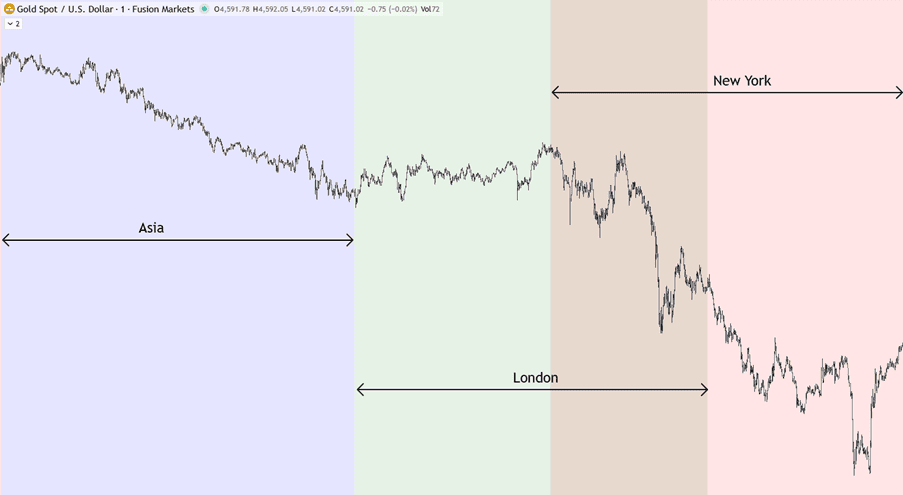
24-hour trading on XAUUSD (1-min chart).
The day usually begins relatively quietly during Asian trading hours. That doesn’t mean gold is inactive – there are still moves worth paying attention to – but compared to what comes later, things are often calmer. Liquidity is thinner, participation is lower, and price action can become choppy or range-bound.
A lot of traders make the mistake of trying to force trades during these quieter periods simply because the market is open. In reality, gold often spends much of the Asian session drifting sideways while traders wait for Europe to come online. There are exceptions, of course. Unexpected geopolitical headlines or major developments out of China can create volatility quickly, but on a typical day the market tends to feel more measured.
Then London opens, and the entire tone of the market often changes.
This is usually where gold starts becoming more active. Volume increases, momentum improves, and overnight ranges can begin breaking. The London session brings a wave of institutional participation into the market, which tends to create cleaner price movement compared to the slower conditions seen earlier in the day.
You’ll often notice that moves which looked convincing during Asia suddenly accelerate once London traders arrive. Other times, the opposite happens – a breakout completely fails as fresh liquidity enters the market and pushes price back the other way. That’s part of what makes gold so interesting to trade. It reacts heavily to participation and sentiment.
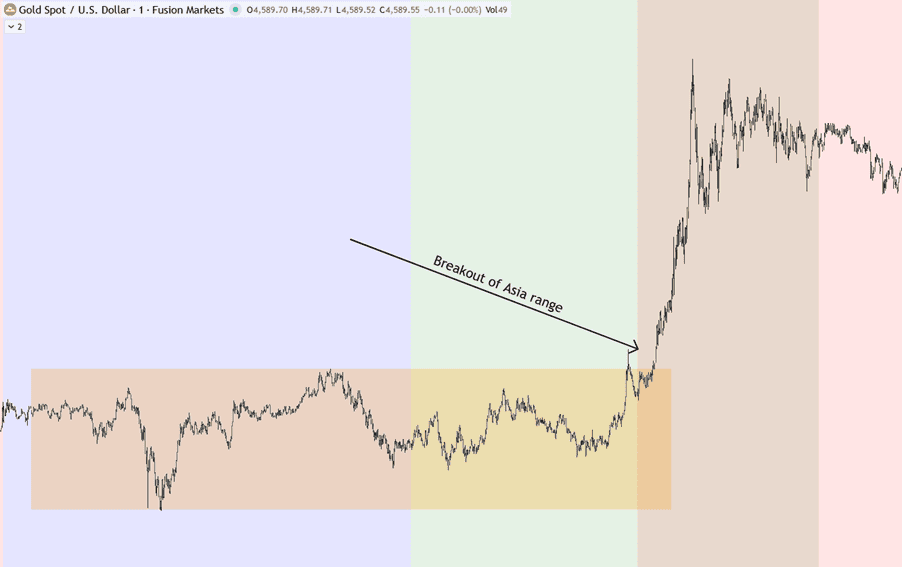
Example of Gold breaking out of the Asia session range (1-min chart).
Gold also tends to respond more aggressively to broader macroeconomic themes during this period as traders begin focusing more closely on the US dollar, Treasury yields, inflation expectations, and general risk sentiment across markets.
Because gold is priced in US dollars, even relatively small changes in the dollar can influence short-term direction. Bond yields matter too. When yields rise sharply, gold can come under pressure as traders move toward interest-bearing assets. But markets are rarely that simple. There are days where yields climb and gold rises anyway because investors are more focused on risk or uncertainty.
That mix of competing drivers is part of the reason gold attracts so much attention.
As New York approaches, activity tends to increase again.
The overlap between London and New York is often where gold becomes most volatile. This is the busiest part of the trading day, with major financial centres operating at the same time and liquidity flowing through the market much more heavily.
For short-term traders, this is usually where the biggest intraday opportunities appear. Momentum can build quickly, trends become more sustained, and reactions to news often become far more aggressive.
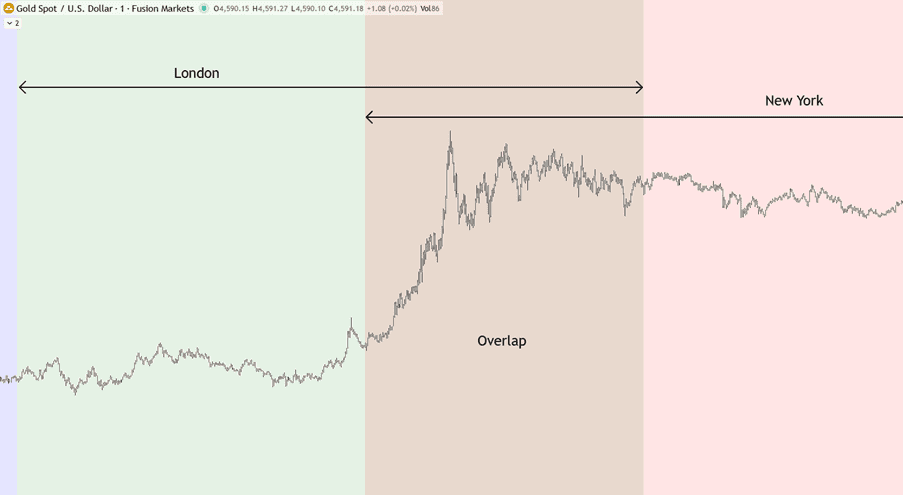
Example of increased volatility during the overlap of London and New York trading sessions (1-min chart).
This is also the period where most major US economic data releases hit the market. Inflation figures, employment data, GDP numbers, Federal Reserve comments – all of these can create sudden bursts of volatility in gold.
What catches many newer traders off guard is that gold doesn’t always react in the “obvious” direction after data releases. A weaker economic number might send gold sharply higher one day because traders expect lower interest rates. Another day, the same type of data barely moves the market because traders are more focused on inflation or broader risk appetite.
That’s why experienced gold traders spend so much time watching market reactions rather than just the headlines themselves.
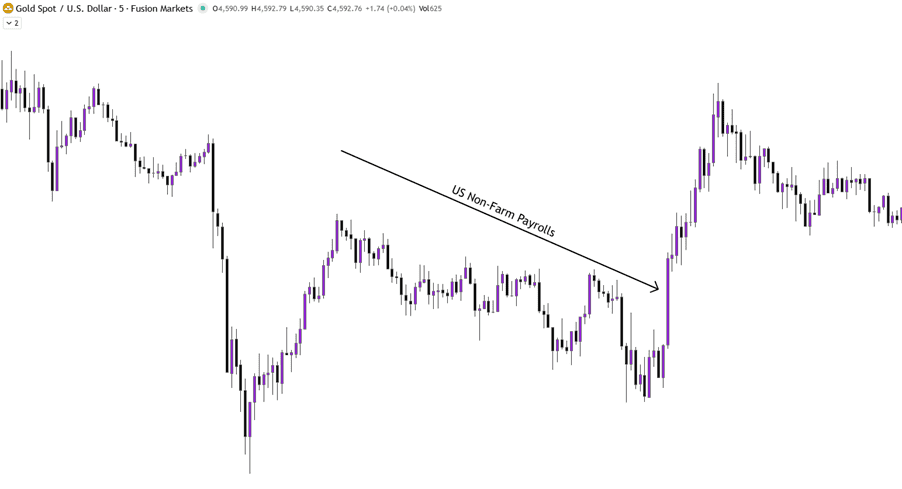
Example of Golds reaction to the US Non-Farm Payrolls data (5-min chart).
Later in the New York session, things often begin slowing down again. Liquidity gradually fades, momentum becomes less reliable, and price action can turn messy heading into the quieter transition before Asia reopens.
This daily cycle repeats constantly, although no two trading days ever feel exactly the same. Some sessions are dominated by central bank expectations. Others revolve around geopolitical tensions, inflation concerns, or broad risk aversion across equities and currencies.
Gold tends to absorb all of it.
That’s what separates it from many other markets. Gold is never just reacting to one thing. On any given day it can behave like a safe haven, an inflation hedge, a momentum trade, or simply a reflection of broader market uncertainty.
For traders, understanding how gold behaves throughout the day can provide valuable context beyond simply looking at candles on a chart. Timing matters. The same setup can behave very differently depending on whether liquidity is thin or whether major institutions are actively participating in the market.
And while gold can offer huge opportunities, it also demands respect. Volatility can expand quickly, especially around major economic events, and price swings are often much larger than newer traders expect.
But that unpredictability is also why gold remains one of the most watched markets in the world. Even on a relatively normal trading day, there’s usually something happening beneath the surface.
We’ll never share your email with third-parties. Opt-out anytime.